Repair or Replace? Refrigerator, Washer and Dryer Math
Don't shop for a new fridge yet. Get the fault found and priced on a written estimate, then weigh it against the age and a new unit.
A written estimate turns a broken appliance into a money question
The fridge is warm, or the washer quit mid-cycle with a drum full of water, and the first question is whether it’s worth fixing at all. Van Nuys Appliance Care books refrigerator, washer, dryer, dishwasher and range repair across the San Fernando Valley with a state-registered, insured tech, and the repair-or-replace decision usually gets made right after that tech’s diagnosis. Until somebody finds the failed part, nobody knows whether you’re looking at a fan motor or a compressor.
In a 2024 Consumer Reports survey, 58% of people whose large appliance failed replaced it instead of repairing it, and 7 in 10 said the repair cost decided it. That cost only means something next to two other numbers: what a comparable new unit costs, and how old yours is.
Tell us these when you call
- Brand and model number from the tag
- How old it is, or the serial number if you're not sure
- What it's doing, and any code on the display
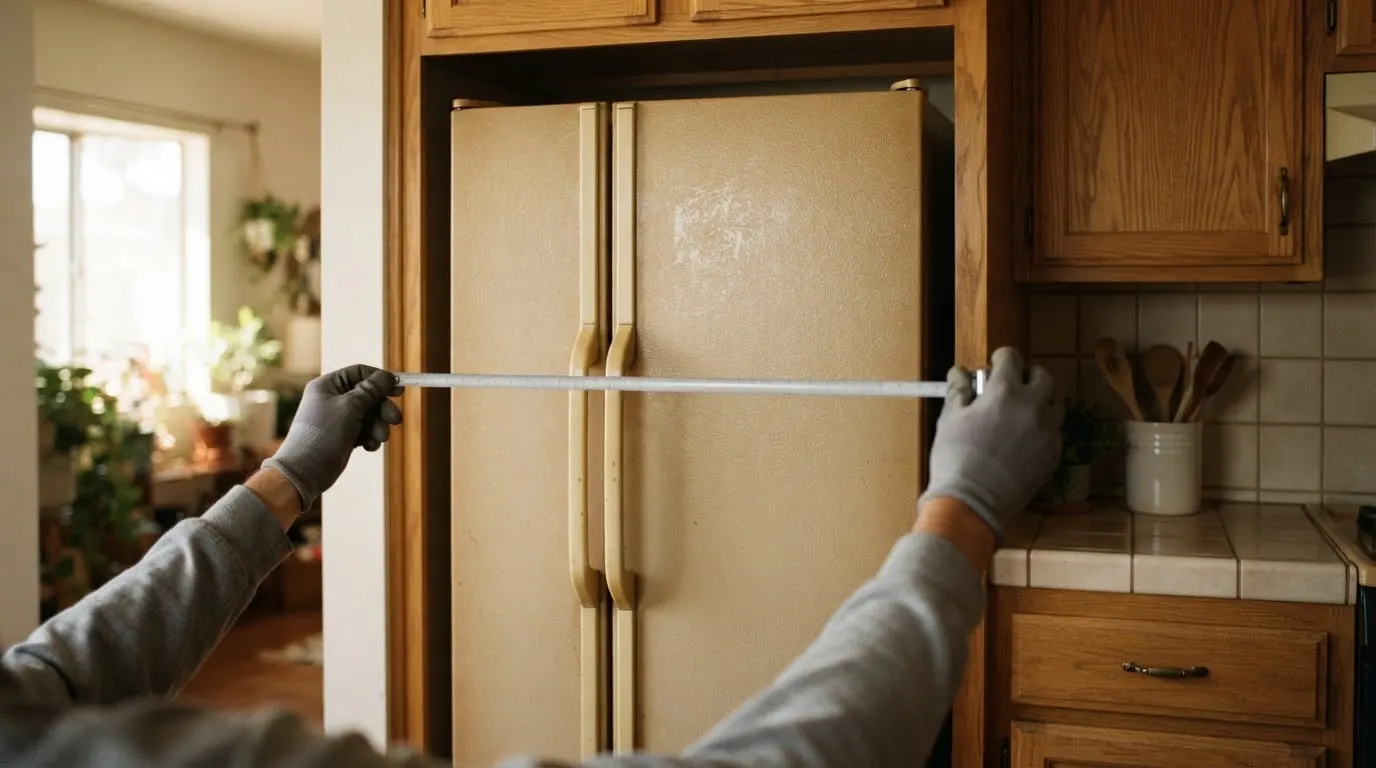
- Freestanding or built-in, so a replacement would have to fit the same opening
Consumer Reports’ 50 percent rule, word for word
The rule most people quote comes from Consumer Reports in 2014: “don’t spend more than 50 percent of the cost of a new product on repairing an old one.” It came from a survey of CR subscribers and is a rule of thumb, not a law.
Some sites add an age test and call it the 50/50 rule: replace when the repair passes half the new price and the appliance has used half its life. The age half isn’t CR’s.
CR’s refrigerator advice, updated in January 2024, adds age and price. Under 10 years old, a fix is “usually more economical.” It says to consider replacing a $400 top-freezer near 10 years, and probably to repair a $1,200 French door at 9.
CR members reported a median of $562 for a compressor repair (what goes into a repair bill). That’s 140% of the $400 top-freezer, so replace it. On the $1,200 French door it’s about 47%, under the line, and the age advice agrees: repair.
Appliance lifespan: what the federal averages say
The U.S. Department of Energy used these average lifetimes in its 2024 efficiency rules.
| Appliance | Average lifetime (DOE, 2024) |
|---|---|
| Standard refrigerator | 14.3 years |
| Standalone freezer | 18.4 years |
| Compact refrigerator | 8.8 years |
| Washer | 13.4 years |
| Dryer | 14 years |
| Dishwasher | about 15.2 years |
| Gas cooking (range, cooktop, oven) | 14.5 years |
| Electric cooking | 16.8 years |
Consumer Reports puts a refrigerator at about 10 years. Past 10, CR starts treating a cheaper fridge as replaceable. Past 14, yours has outlived the federal average, and a big estimate gets hard to justify. A small one still often makes sense, since a fan motor that buys a few more years costs far less than a new fridge delivered.
Garbage disposals aren’t in the table. InSinkErator’s warranty runs 8 to 10 years on its Quiet Series, 4 to 7 on Power Series and 1 to 3 on Standard Series. That tells you the grade of unit under the sink more than how long it will last. Where it leaks matters more, and garbage disposal repair covers that.
Older refrigerator? The sealed system and the power bill tip it
Plenty of fridge repairs happen outside the refrigerant circuit: fans, the defrost heater, the ice maker, the dispenser. CR’s buying guide says models with a through-the-door dispenser need the most repairs, while top-freezers are the most reliable style.
The estimate changes when the tech says “sealed system.” That means the compressor, condenser, evaporator, drier or tubing. The tech recovers the refrigerant, fixes the part and recharges the system, which can push a cheaper fridge past the 50% line.
Energy use tips a close call. ENERGY STAR says a fridge over 15 years old can cost about $95 a year more to run than a certified new model. That won’t buy a new fridge on its own, but it tips a sealed-system estimate on a 16-year-old fridge toward replace, where the same bill on a 6-year-old one leans repair.
A built-in is a different case. A new one has to fit the same cabinet opening, and Sub-Zero covers sealed-system parts for 12 years (parts and labor for the first 5). That coverage can change the math on a sealed-system fault; Sub-Zero repair has the brand details.
Fridge under 10 years old and running warm?
At that age it's usually a repair. Let's find the part first.
Washer, dryer, dishwasher or range: weigh the part against the years left
Is it worth repairing a 10-year-old washer?
Often, yes, when the estimate names a part that wears out, like a drain pump, an inlet valve or a lid switch. At 10, a washer is about three-quarters through the federal average, so a small repair still buys the years it has left. Work that means pulling the drum or the tub is the harder call; hold that estimate against a new washer of the same type and capacity. The symptoms are on the washer repair page.
Dryers: a slow dryer isn’t always an old dryer
No heat often comes down to a heat part such as a thermal fuse, which is a small repair on either fuel (gas and electric dryer repair). A dryer that takes two cycles may have a clogged vent rather than a worn-out machine, and a new dryer on the same vent dries as slowly. The tech checks the airflow on the visit, so you’ll know which one it is before you decide.
Dishwashers and ranges: the tub and the control board decide it
CR’s buying guide rates stainless dishwasher tubs as more durable than plastic ones. An older stainless-tub machine with a pump or valve fault is a stronger repair candidate than a plastic-tub one the same age. Dishwasher repair covers the drain and leak faults that come up most.
On a range, the estimate will name the part: an igniter or a bake element, or the control board. A cheap part on a range short of its federal average is an easy yes. A board is the one to weigh against a new range’s price; the oven and range repair page covers what leads up to each.
Garage fridges, disposals and appliances of unknown age
How can I tell how old my appliance is?
A receipt or a dated manual is quickest. Without those, read us the model and serial number off the tag when you call. Many makers build the manufacture date into the serial number, and the tech can read it on the visit.
Is an old garage fridge worth repairing?
It depends on the part. A fan or defrost heater is a small job; a compressor on a 15-year-old fridge usually isn't worth it. ENERGY STAR says a second fridge in a garage could cost about $90 a year to run, so count that in when the estimate comes.
When is a garbage disposal not worth fixing?
When it leaks from the body or the bottom of the unit. InSinkErator treats that as a replacement. A leak at the top mounting or at the discharge pipe is a connection problem and usually fixable.
What if the tech says it isn't worth fixing?
You'll hear why, with the failed part named and priced. The call is still yours, and nothing gets done until you approve it.
Ask the tech these before you decide
When the estimate is in front of you, these questions settle most close calls:
- Which part failed, and is the part or the labor driving the total?
- Is the part in stock, or on order, and how long until it arrives?
- Has this appliance needed other repairs that point to more coming?
- What would a new one of the same size, fuel and features cost, delivered and installed?
If the numbers say repair, approve the estimate and the appliance gets fixed. If they say replace, you’ll know it from the part and the price, not from a guess. Either way, the first step is the same: call, tell us what it’s doing, and we’ll book the visit.