Oven and Range Repair in Van Nuys
If you smell gas, get outside first. For a cold oven or a door stuck locked, describe what the oven does, and the repair visit goes on the calendar.
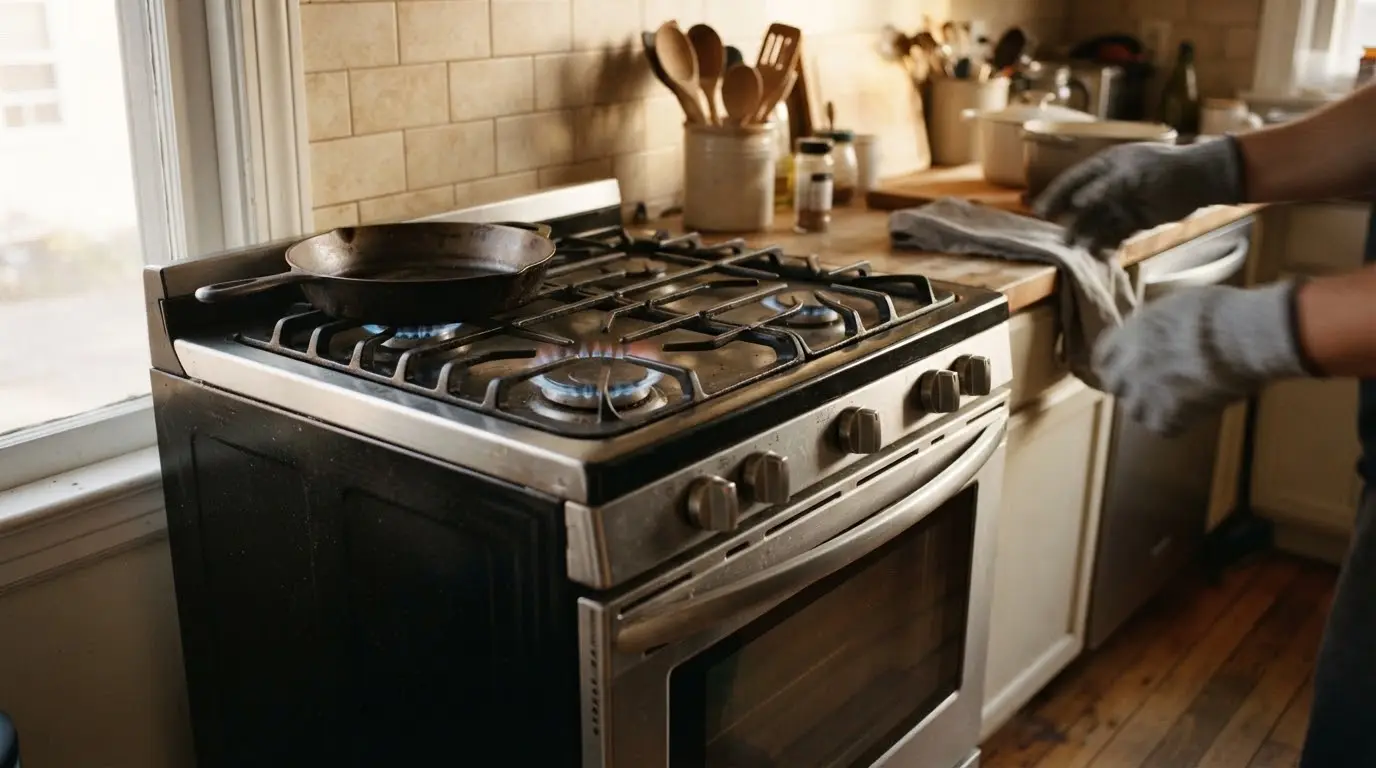
The burners light, but the oven sits cold with dinner half made. Or the bake burner catches with a loud whoomp, or the door stays locked hours after a self-clean. Van Nuys Appliance Care books oven and range repair in Van Nuys and across the San Fernando Valley, on gas, electric and dual-fuel ranges, freestanding or slide-in, plus wall ovens. Tell us what the oven is doing, and we’ll book a state-registered, insured tech to find the part that quit.
Most California kitchens cook on gas: 70% of homes in the state, per the EIA’s 2024 household survey. That’s why the first question on the call is gas, electric or both.
Smell gas near the stove? Leave the house first
If you smell gas
- Get everyone out of the house now.
- On the way out, don’t light a match or a burner, and don’t flip a light switch or unplug anything.
- From outside or a neighbor’s place, call the gas company or 911.
- Once the gas company says the house is safe, call us to book the range repair, and mention the smell.
Some people can’t smell the odorant well. If anyone in the house says they smell gas, treat it as real.
Burners light, oven stays cold
On a gas range with a working cooktop and a dead oven, the fault sits somewhere between the oven’s gas supply and the bake burner. Whirlpool lists the simple causes first: a shut-off lever on the pressure regulator left in the off position, a closed main gas valve, a door that isn’t fully shut, pans stacked in the storage drawer pushing up on the igniter, or foil on the oven floor. Your tech rules those out first, since none of them needs a part.
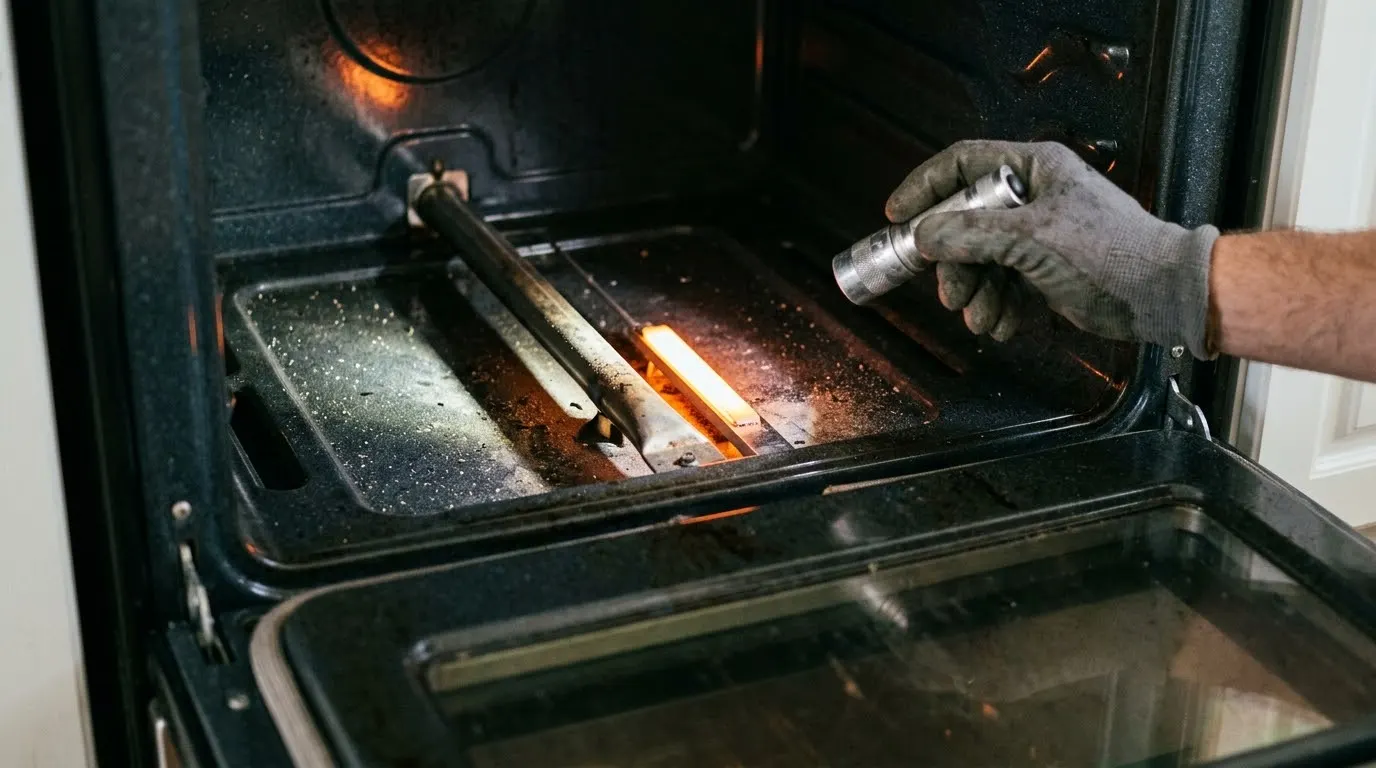
Past that, it’s the bake igniter and the oven safety valve. They work as a pair: the igniter heats up, and only once it’s hot enough does the valve open and send gas to the burner. A tired igniter can glow orange for minutes without ever opening the valve, so you see light under the oven floor and never get a flame. The tech tests the igniter and the valve before naming either one on the estimate.
On the call, say whether the igniter glows, whether anything clicks, and how long you waited.
Bake burner lights late with a bang
A delayed lighting, the whoomp when the oven finally catches, means gas built up before it lit. Stop using the oven and stick to the cooktop until it’s looked at. Give us the model number; if the range is under a safety recall, your tech will tell you.
Oven not heating on an electric or dual-fuel range
An electric range runs on its own 240 V circuit, and a dual-fuel range puts the same kind of electric oven under gas burners. With a cold oven, the tech confirms that power reaches the range on both legs of that circuit, then works inward: the bake and broil elements, the temperature sensor and the control board, each tested with a meter.
Some cold ovens have nothing broken. Control Lock blocks a bake until it’s turned off, and on a Samsung range “tESt” on the display means demo mode. The tech clears those settings before ordering anything. Read us any code on the display; the oven and range error codes by brand show what most of them mean.
Oven cold, burners fine, and no idea whether it's the igniter or the board?
Sorting that out is the first job on the visit. Tell us gas, electric or dual fuel.
Door still locked after a self-clean
The lock on a self-cleaning oven holds until the oven cools to about 200°F, per Whirlpool, so a locked door right after the cycle is normal. A door still locked once the oven is cold is a fault, usually the lock motor, its switch or the control that drives it. Those sit behind the panels, and the tech tests them there. Don’t pry the door: a bent latch adds a part to the bill.
Other range trouble, and what the tech looks at
| What you see | Common causes | What the tech checks |
|---|---|---|
| Gas burner clicks and won't light | Moisture around the igniter after cleaning or a boil-over, or a worn igniter or spark switch | Whether the burner lights once dry, then the igniter and the switch behind the knob |
| Glass cooktop element glows, goes dark, then glows again | Normal cycling that protects the glass | Nothing to repair; tell us if a zone never heats at all |
| Oven runs hot or cold against the recipe | Temperature sensor or the control's calibration; GE shows F3 or F4 for a sensor fault | The sensor and the control; say how far off the oven runs |
| Range pulled out for an earlier repair | The anti-tip bracket at the back wall can get left off | That the range sits back on its bracket |
Clicking burners, cracked glass tops and induction zones have their own page: cooktop repair for gas, glass and induction. For a Viking range, the page on Viking range service covers that brand.
Igniter, element or control board: what moves the bill
The part sets most of the bill. An igniter or a bake element is a common part; a control board usually costs more and may be a part on order. Access counts too, since a wall oven or a slide-in comes out of the cabinet differently from a freestanding range. The cost guide lists common range part prices.
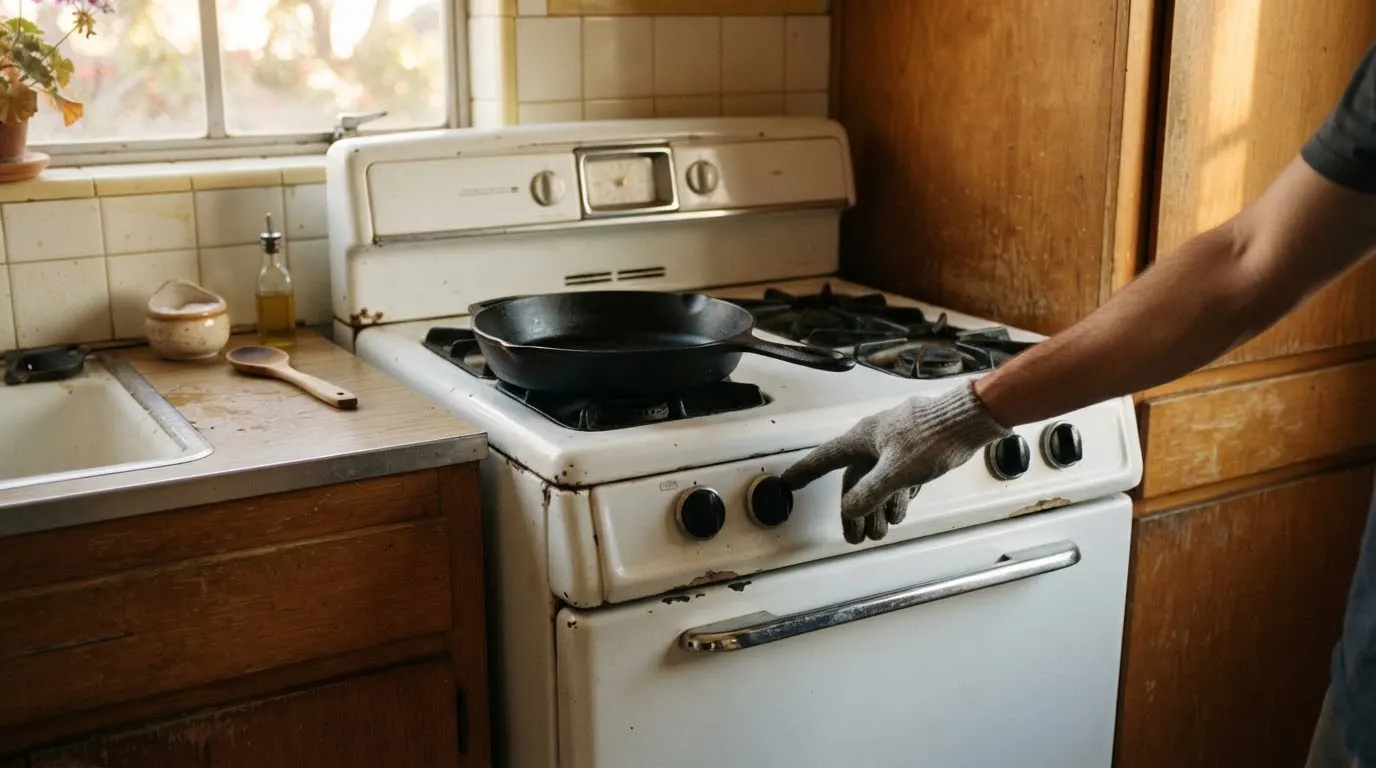
Age is the other half. A worn igniter on a ten-year-old range is a different decision from a failed board on the same range, and the repair or replace guide for ranges and ovens runs that math with real lifespans.
The service call fee and the part go on a written estimate you see before the repair begins, and you only pay for work you agreed to. The state rules behind the estimate are under what to expect from a repair visit.
Tell us these when you call about the range
- Gas, electric or dual fuel
- Brand and model number, often on a tag in the storage drawer or on the oven door frame
- Freestanding, slide-in or wall oven
- What it does, any code on the display and any sound when it lights
- If the range came with the apartment, say so
Oven cold tonight? Read the model number off the tag and call. We’ll book the visit, and your oven gets fixed.
Oven and range questions before the visit
Is a gas oven that won't light usually the igniter?
Often, but not always. The igniter has to get hot enough before the safety valve opens and lets gas reach the bake burner, so a worn igniter can glow and still leave the oven cold. A failed valve looks the same from the front. Your tech tests both before either goes on the estimate.
How long should a gas or electric oven last?
The Department of Energy uses an average life of about 14.5 years for gas cooking products and 16.8 for electric. A range near those ages can still be worth an igniter or an element. A control board on an old range is the harder call, and the written estimate puts a number on it.
What should I say about a dual-fuel range?
Say it's dual fuel: gas burners on top, an electric oven below. A cold oven on that range points to an element, the temperature sensor or the control, not a gas igniter, and that changes what the tech tests first.
Does the range have to come away from the wall for a repair?
For some repairs, yes. When it goes back, it should hook onto its anti-tip bracket at the back wall. Viking's install guide says that device must be installed. Ask your tech to confirm it's hooked before the visit ends.