Gas and Electric Dryer Repair in Van Nuys
Dry towels in one cycle again. A state-registered, insured tech tests the airflow first, then the heat parts, so a new fuse doesn't trip on the same blocked vent.
Damp jeans after a full cycle
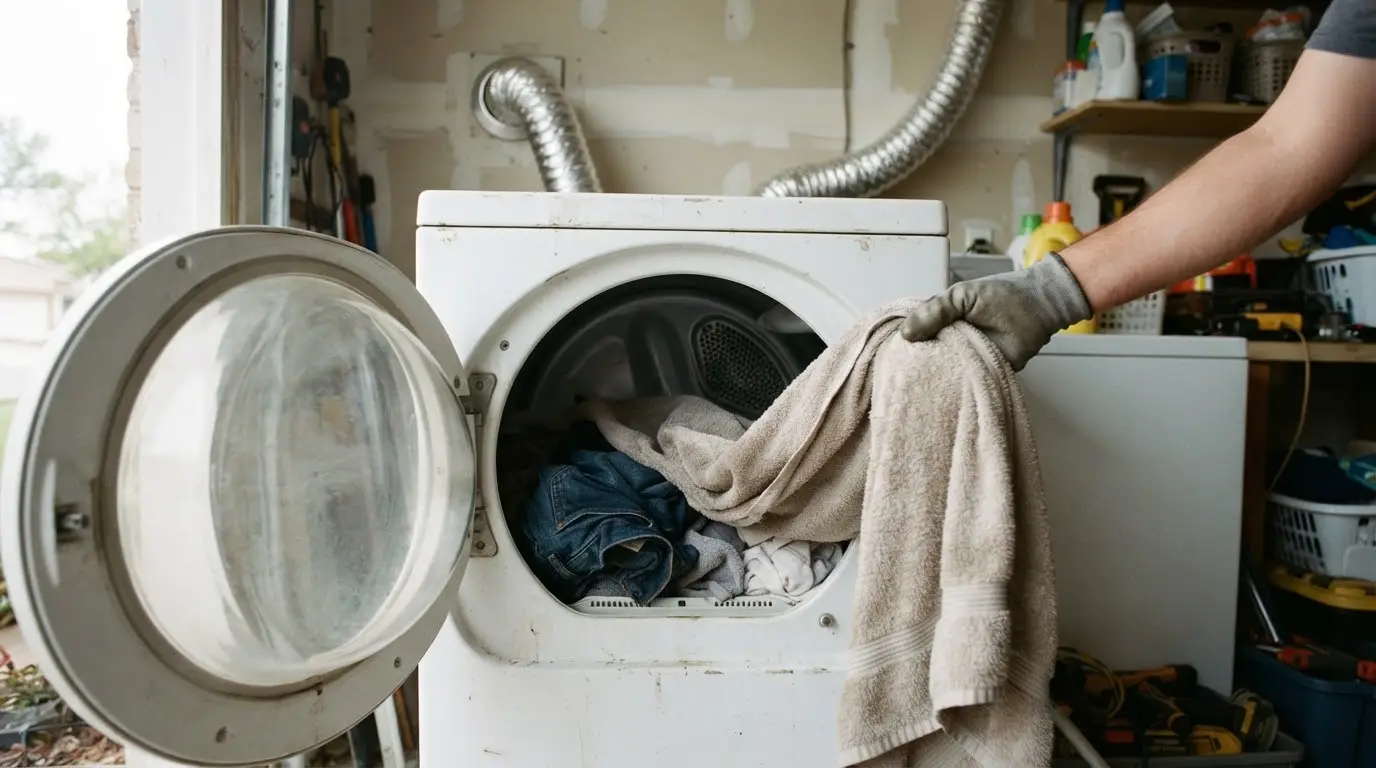
You’ve hit Start twice on the same load and the jeans are still damp at the seams. That’s usually an airflow problem before it’s a heat problem. CPSC says damp clothes after a normal cycle “may be a sign that the lint screen or the exhaust duct is blocked.” Van Nuys Appliance Care sets up gas and electric dryer repair in Van Nuys and the surrounding Valley with state-registered, insured techs, and on a slow-drying call the tech starts at the duct.
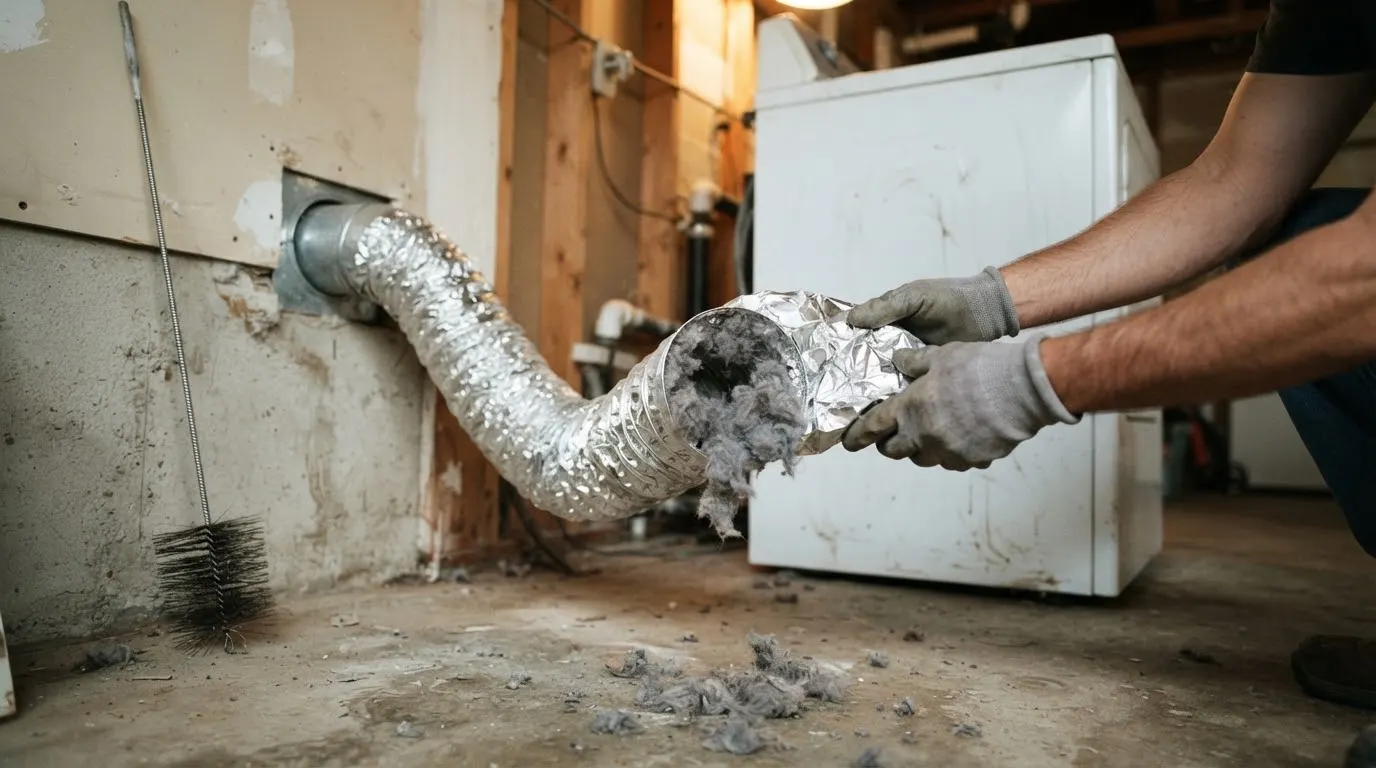
A dryer pushes hot, wet air out through the duct to a flap on the outside wall. When lint packs the duct, or the duct gets crushed behind the machine, the air backs up, the drum stays humid and the dryer runs longer and hotter. The heat parts may be working fine and the clothes still come out damp. On the visit, the tech checks the push of air at the outside flap, looks at the duct behind the dryer and inspects the lint path inside the cabinet.
Tell us how long a normal load takes now, compared with when the dryer was working right.
Vent run: 4-inch metal, under 35 feet
Whirlpool’s spec for a dryer vent:
- Duct: 4-inch rigid or semi-rigid metal. CPSC says foil or plastic accordion duct should be replaced.
- Length: under 35 feet of total equivalent length, and each 90-degree elbow adds resistance.
- Load: the drum half to three-quarters full.
A long run with several turns out to a back wall dries slower than a short straight one, and a new thermal fuse on a blocked run trips again. So the vent gets looked at before any heat part is replaced.
Gas or electric: where the heat stops
Drum turning but no heat? First, Whirlpool notes the Air Only cycle adds no heat at all. Past that, the cause depends on the fuel.
| Gas dryer | Electric dryer | |
|---|---|---|
| Power it needs | Electric power for the motor and controls, plus a gas line | A 240 V supply on its own 30-amp circuit, fused on both sides |
| Where the heat comes from | A gas burner fed through the gas valve | Heating coils in the airflow path |
| Common no-heat causes | Closed shutoff valve, gas valve coils, ignition, thermal fuse | One breaker leg off, heating element, thermal fuse and cut-off, thermostats |
| What to tell us | That it’s gas, and whether it was moved lately | Whether the breaker tripped, and any L2 code |
Electric dryer: one breaker leg out
Whirlpool says an electric dryer’s circuit is “fused on both sides of the line.” One side runs the motor and the other runs the heater, so with one side tripped the drum keeps turning cold. Some Whirlpool models post an L2 code when line voltage is low or missing. If the power is there, the tech meters the heating element, the thermal fuse and the thermostats, and checks the terminal block where the cord meets the dryer for loose or scorched screws.
Gas dryer: valve, ignition and fuse
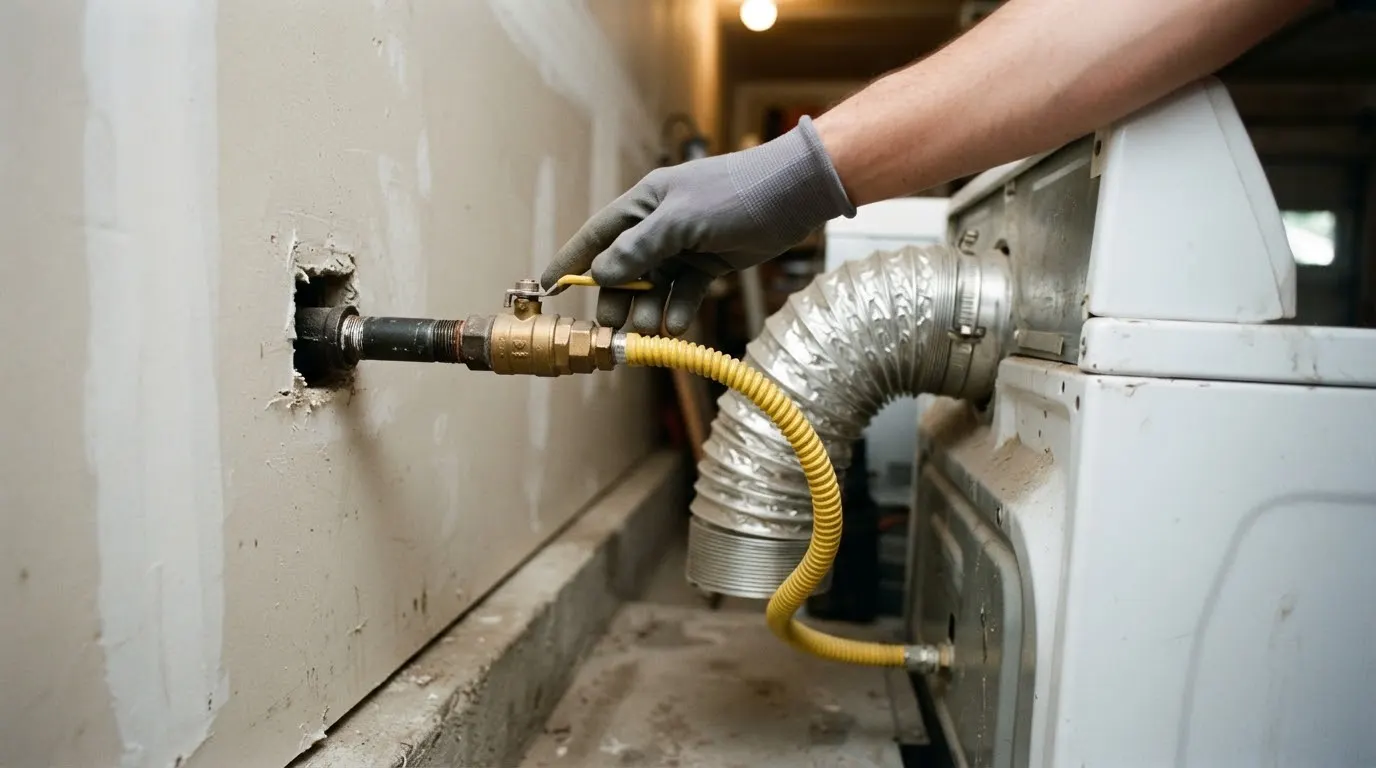
A gas dryer still needs electric power for the motor and controls, so a dark display is a power problem, not a gas one. With power on and no heat, a closed shutoff valve leaves the drum turning cold; Whirlpool says the handle sits parallel to the pipe when it’s open, so mention it if the dryer was moved lately. Past the valve, the tech tests the ignition, the gas valve and the thermal fuse. Those parts sit on a live gas line.
Smell gas at the dryer?
- Leave the house now and take everyone with you.
- Don’t switch lights or appliances on or off, and don’t light anything.
- Phone 911 or the gas utility once you’re clear of the house.
- Once it’s safe, call us to book the dryer repair.
Drum turning, breakers on, and the clothes come out cold?
A heating part needs testing. Tell us gas or electric and any code on the display.
Thermal fuse blown: what tripped it
A blown thermal fuse means the dryer got hot enough to trip a safety part. CPSC’s engineering report found at least three parts in a dryer that regulate or limit heat. The electric unit it tested had an operating thermostat, a high-limit thermostat, a one-shot thermal fuse and a one-shot thermal cut-off. One-shot means it can’t reset; once tripped, it gets replaced.
The fuse is the symptom. The question the tech answers on the visit is why it got that hot: a restricted vent or a thermostat that failed. Fuse part prices are in the dryer parts list on the cost guide.
Failure to clean is the leading factor in home dryer fires, 31% in the U.S. Fire Administration’s 2018 to 2020 figures. If you smell burning or pull out a scorched load, stop using the dryer and call.
Squeals, thumps and vent codes
| What you see | Common causes | What the tech checks |
|---|---|---|
| Squeal or chirp | Worn belt and pulleys, or lint on them (Whirlpool) | The belt and pulleys |
| Thump or rumble, often after the dryer sat unused | Flat spots on the drum support rollers (Whirlpool) | The drum support rollers |
| AF or Check Vent (Whirlpool), C8 or C9 (Samsung), d75 to d95 (LG) | Restricted airflow between the lint screen and the outside flap | Airflow at the flap, the duct, and the lint path inside |
| Drum won't turn, display on | Needs the cabinet opened to pin down | The drive parts, with the cabinet open |
Write any other code down exactly as shown; the dryer code tables list the rest.
Mobile home and heat pump dryers
In a manufactured home, federal code (24 CFR 3280.708) says every gas and electric dryer must exhaust outside, and the duct “shall not terminate beneath the manufactured home.” A duct that has come loose under the skirting dumps hot, wet air under the home and leaves the dryer slow. That comes up in Sylmar mobile home parks and parks in Canyon Country. Say it’s a mobile home when you call.
A heat pump dryer has no vent at all. ENERGY STAR describes a closed loop that reuses heated air and uses about 70% less energy than a standard dryer, with the water draining through a hose or collecting in a tank. When one stops drying, the tech looks at the lint path, the drain or tank, and the heat pump system instead of a duct.
Dryer repair cost: the parts that set the price
Part prices sit on the cost guide. On your estimate, the number turns on:
- The part: a thermal fuse or a belt runs less than a heating element, a gas valve or a motor.
- Gas or electric, since the heat parts are different.
- The service call fee, written on the estimate as its own line.
Nothing gets replaced until you’ve seen the written estimate and said yes to it. If you’re leaning toward a new dryer, the repair or replace guide covers the math and the haul-off.
Say this when you call about the dryer
- Gas or electric: a gas pipe and valve behind it means gas; a big plug on a double breaker means electric
- Brand and model number off the tag inside the door
- What it's doing, and any code on the display
- The duct: metal or foil, how long, how many turns, where it exits
- House laundry, apartment, stacked unit or mobile home
Washer acting up too? Mention it, and washer repair has the drain and spin side. Call with gas or electric and what the duct looks like, and we’ll get your dryer heating and drying in one cycle.
Dryer questions callers ask
How often should a dryer vent be cleaned?
Once a year, or sooner if drying slows, per NFPA's dryer safety tips. Whirlpool says every one to two years. Tell us when yours was last done, because the tech checks airflow before testing any heat part.
Does the inside of the dryer need cleaning too?
Now and then, yes. CPSC advises having a qualified service person clean inside the cabinet periodically, since lint collects behind the panels. Ask about it while the dryer is open for a repair.
What does d90 or d95 mean on an LG dryer?
The exhaust is badly restricted. LG says to stop using the dryer until the exhaust is cleaned and repaired. Call with the code and tell us how the duct runs from the dryer to the outside.
Is a 12-year-old dryer worth fixing?
It can be. The Department of Energy's dryer rule uses an average life of 14 years, so 12 is late but not done. Hold the written estimate up against the price of a similar new dryer.